
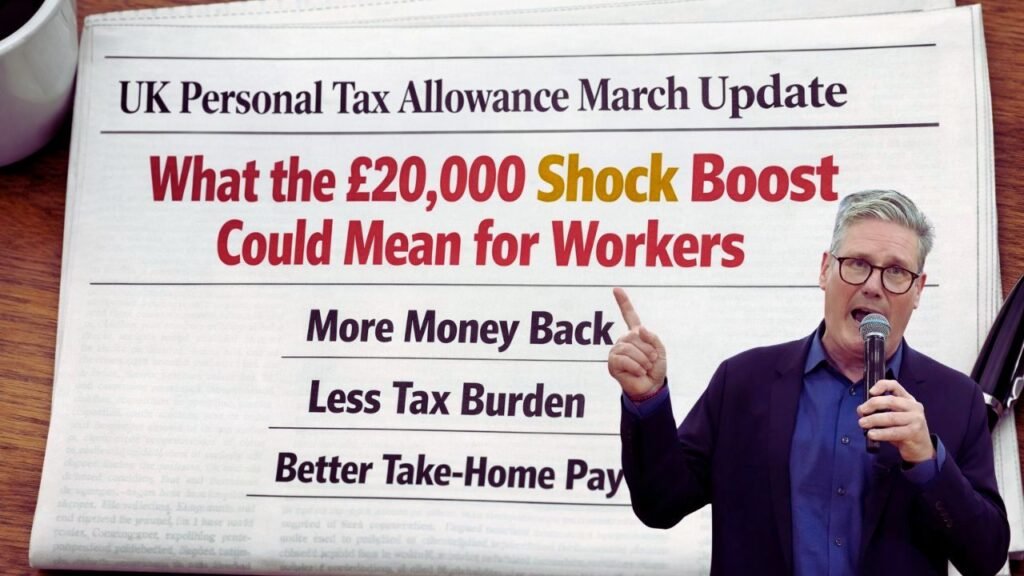
As the UK approaches the end of the current financial year, a significant amount of public debate has centered on the “£20,000 milestone” regarding personal taxes. While this figure has dominated headlines and social media discussions throughout March 2026, it is essential for workers to distinguish between active government policy and the growing campaign for tax reform.
The Reality of the £12,570 Tax Freeze
Despite widespread speculation and viral reports suggesting a jump to a £20,000 tax-free threshold, the standard Personal Allowance remains officially frozen at £12,570. This freeze, originally implemented years ago, has now been extended by the Treasury until at least April 2031. For the average worker, this means that the amount of money you can earn before paying a single penny in income tax has not changed, even as the cost of living and nominal wages have risen.
This policy has led to a phenomenon known as “fiscal drag,” where inflation-linked pay rises push employees into higher tax brackets or pull low-income earners into the tax system for the first time. While your paycheck might look larger on paper due to an annual raise, a higher percentage of that income is being captured by HMRC because the tax-free buffer has remained static.
Why the £20,000 Figure is Trending
The mention of £20,000 in recent news updates usually refers to one of two distinct areas of the UK financial landscape. It is critical for taxpayers to understand which category applies to their specific situation to avoid confusion during the March 2026 update cycle.
- The annual ISA allowance remains at £20,000, allowing savers to shield interest and investment gains from tax.
- Advocacy groups have hit a “milestone” in signatures for a petition to raise the Personal Allowance to £20,000.
- Political analysts often use the £20,000 figure as the target threshold required to “inflation-proof” the wages of the UK’s lowest earners.
- Some localized pilot programs have discussed higher work allowances, but these do not apply to the national income tax standard.
While the milestone of public support for a £20,000 allowance is significant, it has not yet translated into a change in the law. Workers should continue to plan their 2026/27 budgets based on the existing £12,570 limit.
Impact on Pensioners and Part-Time Staff
The freezing of the allowance is having a particularly noticeable impact on those receiving the New State Pension. As the pension amount increases annually under the “triple lock” system, it is creeping closer to the £12,570 limit. This means many retirees who have even a modest private pension are finding themselves becoming taxpayers for the first time in their retirement.
For part-time workers, the static allowance creates a ceiling on how many hours they can work before their take-home pay is affected by the 20% basic rate. This has led to calls from various sectors for a “tapered” increase to the allowance to encourage more people back into the workforce without the immediate penalty of income tax.
Key Changes Arriving in April 2026
While the Personal Allowance itself isn’t moving to £20,000 this March, there are several other confirmed adjustments that will take effect when the new tax year begins on April 6th. Employers and employees alike need to be prepared for these administrative shifts.
- National Minimum Wage and Living Wage rates are set to increase, providing a boost to gross pay for millions.
- Dividend tax rates are increasing by 2%, affecting those who receive income from shares.
- The “work from home” tax relief for additional household costs is being phased out or restricted for many remote workers.
- Making Tax Digital (MTD) becomes mandatory for self-employed individuals with income over £50,000.
These changes represent a broader strategy by the government to maintain tax revenue through “stealth” measures and increased compliance rather than raising the headline rates of income tax.
Looking Ahead to the Spring Budget
The Chancellor’s recent statements have emphasized fiscal stability over large-scale tax cuts. While there is immense pressure from backbenchers and the public to address the frozen thresholds, the current economic priority remains the reduction of national debt. Any future movement toward a £20,000 allowance would likely be a multi-year project rather than a single overnight update.
For now, the best strategy for workers is to maximize their existing allowances. Utilizing the £20,000 ISA limit and contributing to a pension remain the most effective ways to reduce your overall tax burden while the primary personal threshold remains stuck at the 2021 level.
Frequently Asked Questions
Is the tax-free allowance definitely staying at £12,570?
Yes, the government has confirmed that the standard Personal Allowance will remain at £12,570 for the 2026/27 tax year. The current legislation keeps this figure frozen until April 2031.
Why do I see news about a £20,000 tax change?
Most of these reports refer to the ISA (Individual Savings Account) limit, which is £20,000 per year. Others are reporting on the milestone of a public campaign or petition urging the government to raise the income tax threshold to that level.
What is fiscal drag and how does it affect my pay?
Fiscal drag happens when tax thresholds stay the same while wages go up. Even if your “real” wealth hasn’t increased, you end up paying more tax because more of your income sits above the frozen £12,570 line.
Does Scotland have the same £12,570 allowance?
Yes. While the Scottish Government sets its own tax rates and bands (such as the 19% starter rate), the Personal Allowance remains a UK-wide figure managed by the central government.
Can I still claim tax relief for working from home?
From April 2026, the rules for claiming the flat-rate £6 per week deduction are becoming much stricter. Most employees will only be able to claim if their employer does not provide a physical office space or if the costs are specifically reimbursed.