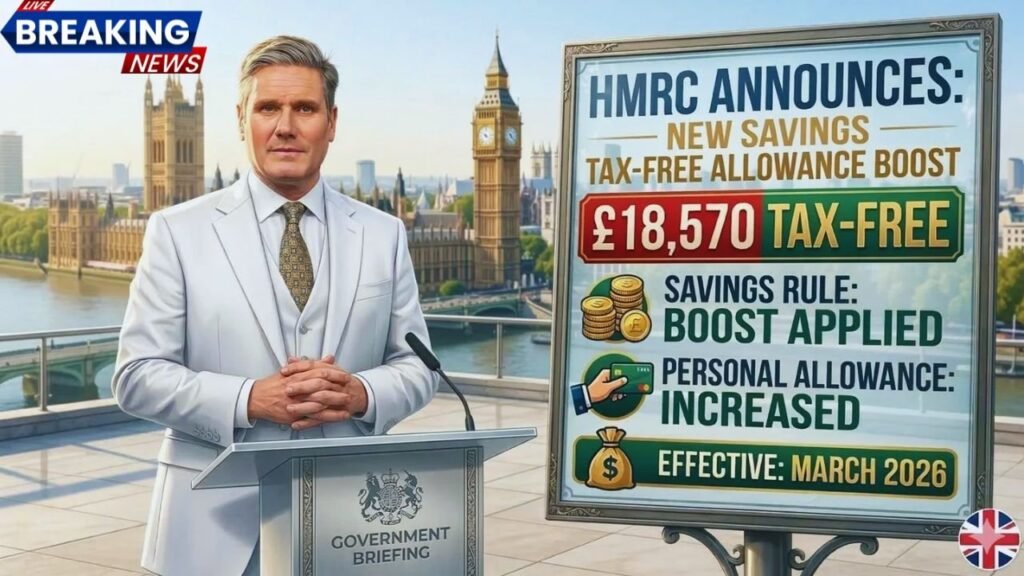
Millions of people across the UK are looking for ways to protect their money as living costs stay high. In a move that has caught many by surprise, HM Revenue and Customs (HMRC) has highlighted a specific rule that allows some people to earn up to £18,570 without paying a penny in income tax. While the standard tax free limit usually stays much lower, this “savings boost” is a legal way for lower earners and retirees to keep more of their hard earned cash. It is all about how you mix your normal income with the interest you earn from your bank accounts.
How the Magic Number Works
Most people know that the standard Personal Allowance is £12,570. This is the amount you can earn from a job or a pension before tax starts. However, if your income is low but you have a good amount of savings, you can add two other special allowances on top of that. The first is the “Starting Rate for Savings” which gives you £5,000 of tax free interest. The second is the “Personal Savings Allowance” which adds another £1,000 for basic rate taxpayers. When you add £12,570 plus £5,000 plus £1,000, you get a total tax free ceiling of £18,570.
Who Benefits the Most?
This rule is specifically designed to help people who do not have a large salary or a big private pension but do have some money in the bank. Retirees who rely on the State Pension are the main group that can take advantage of this. Since the State Pension is currently below the £12,570 limit, many seniors have “unused” space in their tax allowance. By using the savings rule, they can earn thousands of pounds in interest from high street bank accounts or building societies without having to report it or pay tax on it.
Breaking Down the Allowances
To understand if you qualify for the full boost, you have to look at how much you earn from work or pensions. If your other income is over £17,570, you won’t get the starting rate for savings at all. Below is a simple table to show how the different parts of the £18,570 limit fit together.
| Type of Allowance | Amount | Who Gets It? |
| Standard Personal Allowance | £12,570 | Almost every UK taxpayer |
| Starting Rate for Savings | Up to £5,000 | People with low non savings income |
| Personal Savings Allowance | £1,000 | Basic rate taxpayers |
| Total Potential Tax Free | £18,570 | Low earners with high savings |
The Catch You Need to Know
There is an important detail to remember about the £5,000 starting rate. For every £1 you earn from a job or pension above your £12,570 personal allowance, your starting rate for savings goes down by £1. For example, if you earn £13,570 from a part time job, you have gone £1,000 over the basic limit. This means your £5,000 savings boost drops to £4,000. It is a sliding scale that rewards those with the lowest traditional incomes. If your wages are high, this specific boost won’t apply to you.
Why HMRC is Sharing This Now
With the new tax year approaching in April 2026, HMRC wants to make sure people are not overpaying. Many people have moved their money into high interest accounts recently because rates have gone up. If you are not careful, you might think you owe tax on that interest when you actually do not. By confirming these rules in March, the government is helping people plan their finances before the deadline. It is also a reminder to check your tax code to make sure HMRC has the right information about your different income streams.
Steps to Take Next
If you think you might be eligible for this £18,570 tax free limit, you should start by gathering your bank statements.
- Calculate your total income: Add up your wages and your pension for the year.
- Check your interest: Look at how much total interest your bank paid you.
- Review your tax code: Make sure your HMRC account shows your correct estimated income.
- Talk to your bank: Ask if they have already sent your interest details to HMRC, as this usually happens automatically.
Frequently Asked Questions
Do I need to apply for the £18,570 limit?
No. You do not need to fill out a special form. HMRC should apply these allowances automatically based on the income information they receive from your employer, pension provider, and bank.
What if I earn more than £18,570?
If your total income including interest goes over this amount, you will only pay tax on the part that is above the limit. For most people, this will be at the basic rate of 20 percent.
Does this rule apply to ISAs?
Money in an ISA is already tax free and does not count toward these limits. The £18,570 rule is for interest earned in “normal” savings accounts that are usually taxable.
What happens if I live in Scotland?
While Scotland has different tax bands for wages, the rules for savings interest are the same across the whole UK. You can still benefit from the savings boost even if you pay the Scottish rate of income tax on your salary.